


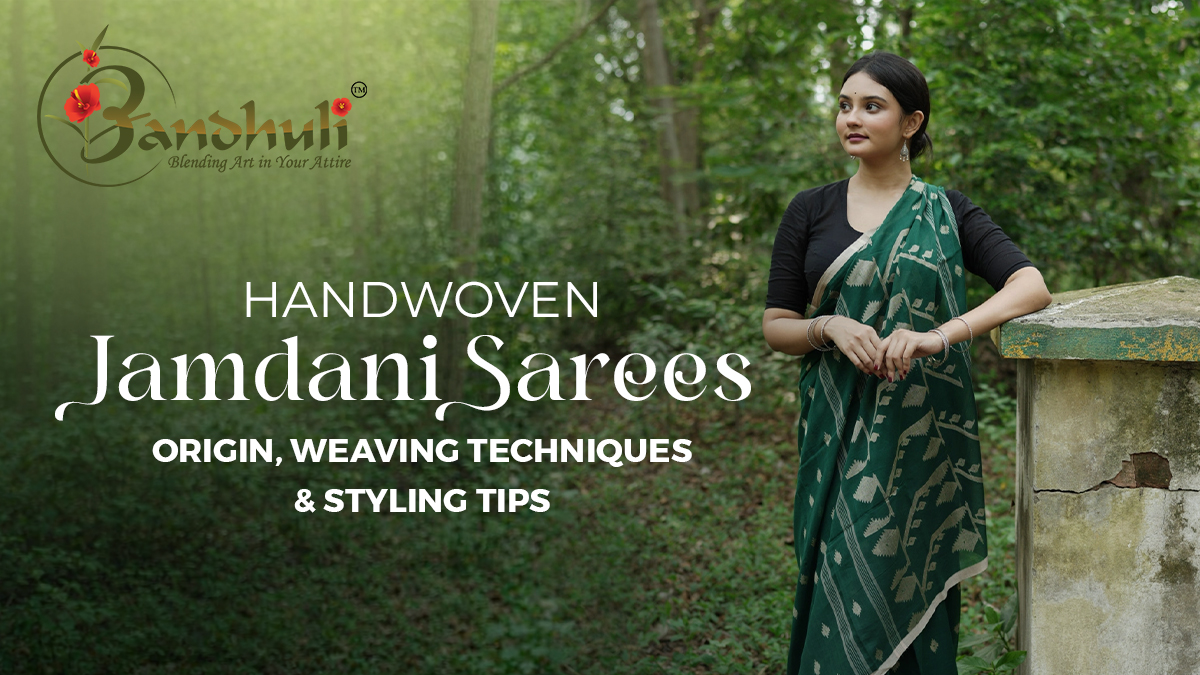
Finding the finest collection of jamdani sarees online is the first step toward owning a piece of textile history that represents the pinnacle of Bengali weaving. At Bandhuli, we believe that understanding the heritage and labor behind a Jamdani saree enhances the experience of wearing one. This guide provides a detailed look into the origins, the intricate weaving process, and practical styling tips for these handwoven masterpieces.
The Origin and History of Jamdani
The word “Jamdani” is of Persian origin, derived from ‘Jam’ meaning flower and ‘Dani’ meaning vase. Historically known as Muslin, this fabric has been mentioned in ancient texts dating back to the first century AD. However, it was during the Mughal era that Jamdani weaving received significant royal patronage, evolving into the refined art form we recognize today.
While the craft originated in Dhaka, Bangladesh (Dhakai Jamdani), the partition of Bengal led many skilled weavers to migrate to West Bengal, India. Today, regions like Kalna, Shantipur, and Phulia are prominent centers for Jamdani production. These sarees were traditionally woven with fine cotton, though modern variations include silk and cotton-silk blends to cater to contemporary tastes.
The Intricate Weaving Technique
The uniqueness of a handwoven Jamdani lies in its “supplementary weft” technique. Unlike other sarees where patterns are printed or embroidered after the fabric is made, Jamdani motifs are woven directly into the fabric on the loom.
- The Loom: Weavers use traditional pit looms. The process involves two weavers sitting side-by-side, working in synchronization.
- The Motifs: Patterns are not sketched on the fabric. Instead, they are drawn on graph paper and placed underneath the warp threads as a guide.
- The Phor (The Discontinuous Weft): The weaver uses a small bamboo or bone needle (called a kandir) to lift the warp threads and manualy insert the decorative threads. This is done thread by thread, making it one of the most labor-intensive forms of hand-weaving.
- Transparency: One of the hallmarks of a genuine Jamdani is the contrast between the sheer base fabric and the opaque, dense motifs that appear to float on the surface.
How to Identify an Authentic Handwoven Jamdani
In a market flooded with machine-made replicas, identifying a genuine handwoven piece is essential.
- The Reverse Side: In a handwoven Jamdani, the back of the motifs looks almost identical to the front. There are no loose threads or “floats” commonly seen in machine-made or Jacquard sarees.
- Texture: Handwoven Jamdani is soft and breathable. Machine-made versions often feel stiffer and heavier due to the use of synthetic fibers.
- Weight: Pure cotton Jamdanis are extremely light, often referred to as “woven air.”
Styling Tips for Jamdani Sarees
A Jamdani saree is versatile enough for both formal events and casual gatherings. Here is how you can style them effectively:
1. The Classic Look: For a traditional look, drape a white or off-white Dhakai Jamdani with a red border. Pair it with a red bindi, gold jewelry, and a bun adorned with flowers. This is a timeless choice for festivals like Durga Puja.
2. Modern Corporate Style: Choose Jamdanis in pastel shades or muted tones like grey, beige, or navy blue. Pair the saree with a high-neck blouse or a boat-neck design. Minimal silver jewelry and a sleek watch complete a professional yet elegant ensemble.
3. Contrast Blouses: Since many Jamdanis feature subtle colors, you can experiment with the blouse. A contrasting silk blouse or a hand-painted Kalamkari blouse can add a modern edge to the traditional weave.
4. Winter Styling: During cooler months, you can layer your Jamdani with a silk trench coat or a hand-knitted shrug. Because the fabric is light, it does not look bulky when layered.
Care and Maintenance
To ensure your Jamdani saree lasts for generations, follow these care steps:
- Dry Clean Only: Always dry clean your Jamdani sarees to preserve the delicate weave and prevent the colors from bleeding.
- Storage: Wrap the saree in a clean muslin cloth. Avoid using plastic covers as the fabric needs to breathe.
- Refolding: Change the fold of the saree every few months to prevent the fabric from tearing along the crease lines.
- Ironing: Use a low heat setting and always iron on the reverse side with a protective cloth on top.
Conclusion
A Jamdani saree is not just a garment; it is a testament to the skill and patience of Indian weavers. At Bandhuli, we take pride in bringing these authentic weaves directly from the looms to your wardrobe. Whether you are looking for a simple cotton Jamdani for daily wear or an intricate silk-blend for a wedding, our collection reflects the true spirit of Bengal’s textile heritage. Contact us for more information.